Why subcontracting matters in steel fabrication
In construction and industrial projects, workloads rarely stay perfectly even. A contractor may need extra fabrication capacity for a limited period, while a manufacturer may need support for a specific batch of steel products without expanding permanently.
For steel fabrication, subcontracting works best when the scope is practical and technical: drawings, sketches, revision status, material requirements, finish, inspection and delivery conditions must be clear before work starts.
Weldsteelcon supports drawing-based fabrication within the confirmed product range of the site, keeping the discussion tied to customer information rather than assumptions.
What Weldsteelcon can support through subcontracting
The subcontracting scope can cover defined steel fabrication tasks where the customer provides the drawings and technical specification. The goal is to add reliable production capacity for a clear package of work.
- Welded steel structures and bolted connection details
- Building steel structures, beams, columns, trusses and bracing
- Offshore and marine steel constructions made to customer drawings
- Horizontal steel storage tanks, containers, supports and fittings
- Hangar frameworks and prefabricated steel hall components
- Hooklift containers, roll-off flatbeds and container frames
- Surface preparation, primer, paint or hot-dip galvanising when specified
- Inspection and documentation scope agreed before fabrication
What to define before work starts
A good subcontracting enquiry should make the work easy to understand before price, timing and production planning are discussed. Clear information also helps avoid repeated clarification loops during fabrication.
- Current drawings, sketches or part lists with revision status
- Quantities, material grades and any certificate requirements
- Critical dimensions, interfaces, holes and connection details
- Weld, inspection and documentation requirements
- Surface protection requirements, including colour and coating system where relevant
- Delivery location, target timing, packing and marking requirements
How our team works with your drawings
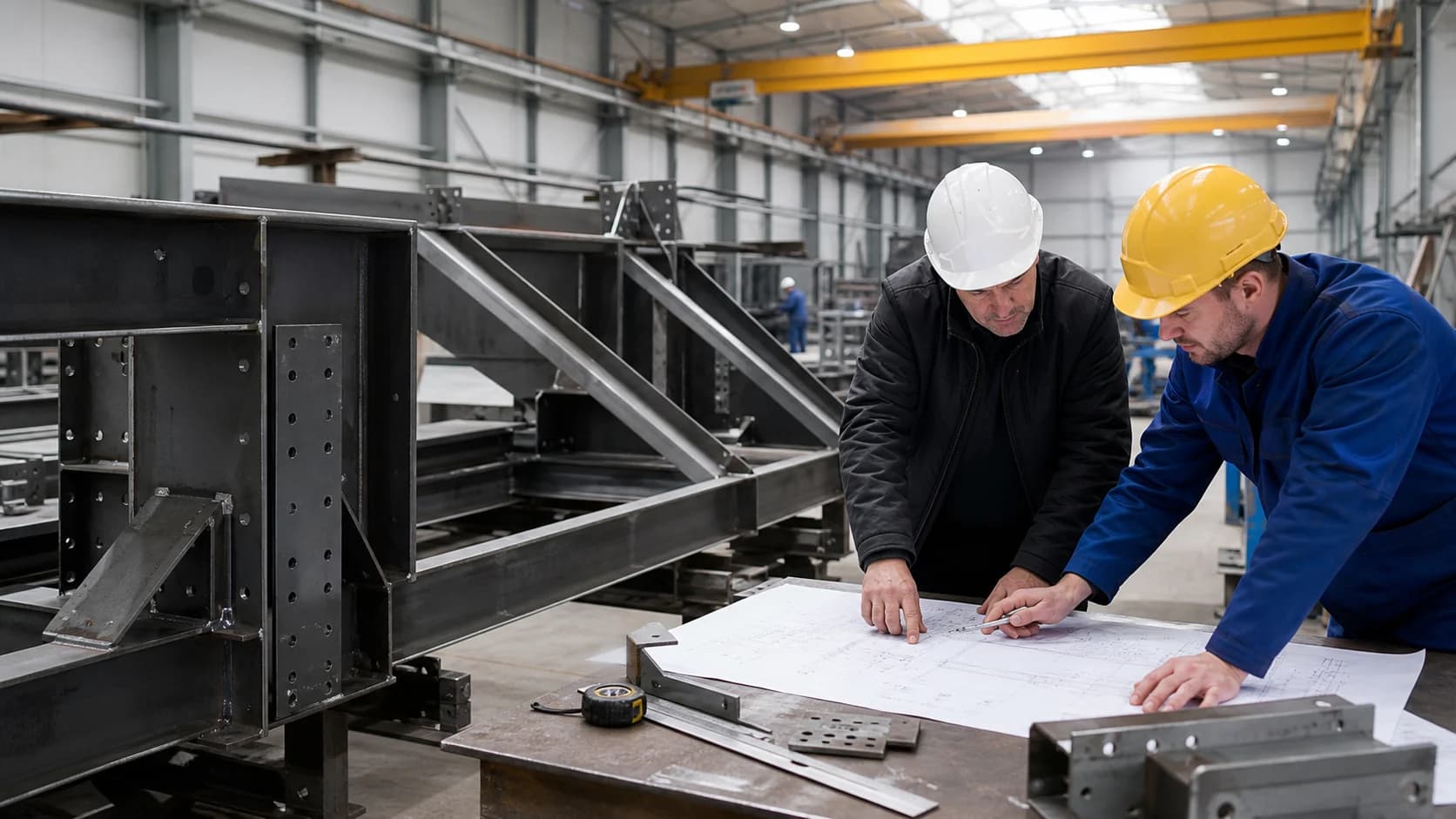
The process stays tied to the drawings and technical requirements supplied by the customer. Our team reviews the scope, raises clarification questions when information is missing and plans fabrication around the agreed requirements.
Steel parts are prepared, fitted, welded, checked, finished and packed according to the approved information. When drawings change, revision control keeps production, inspection and documentation aligned with the latest agreed scope.
Why contractors and manufacturers use subcontracting
Subcontracting is useful when a company needs dependable steel fabrication support without carrying unused capacity between projects. It can also help split a larger project into manageable production packages.
- Extra fabrication capacity during peak workloads
- A defined scope based on drawings and specifications
- Practical support for repeated batches or one-off steel assemblies
- Less need to maintain idle equipment for occasional specialist work
- A clearer route for planning finish, documentation and delivery
Quality and documentation
Quality requirements should be defined before fabrication starts. The site references EN 1090-1,2 · EN ISO 3834 · EN ISO 4063 · CE 1090-1,2 · EVS-EN ISO 3834-2 · EXC 2 · EXC 3, while each project still needs its own agreed inspection and documentation scope.
Depending on the specification, documentation can include material certificates, welding records, inspection reports, coating records and other records requested by the customer.
Who can benefit from this approach
Subcontracting is most useful when the technical scope is already defined and the customer needs additional steel fabrication capacity for a clear package of work.
- General contractors needing steel components for building frames, halls or access structures
- Manufacturing companies with peak workloads or repeated steel product batches
- Engineering and procurement teams with approved drawings and specifications
- Industrial customers who need welded steel products fabricated to defined requirements
Frequently asked questions
Does subcontracting require complete drawings?
For a reliable quote and production plan, the drawings must define geometry, materials, interfaces, finish and documentation requirements. Sketches can start the discussion, but missing technical data must be clarified before fabrication.
Can Weldsteelcon support peak production workload?
Yes, when the product fits the confirmed scope and the timing, quantity, drawings and specification are agreed before work starts.
Do you provide structural design or engineering calculations?
Weldsteelcon fabricates according to customer drawings, sketches and technical specifications. Structural design, calculations and engineering sign-off are provided by the customer or their appointed engineer.
What should I send for a subcontracting quote?
Send the drawing package, revision status, quantity, material requirements, finish, inspection scope, delivery location and target timing.
Send your drawings and specification — we will review the subcontracting scope and reply with the next steps.